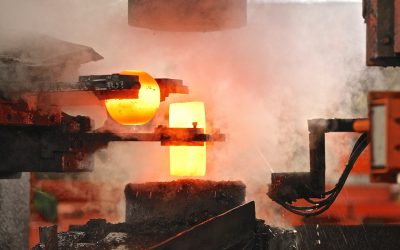
Robotic painting cells
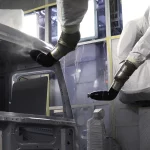
Robotic painting cells are designed to apply paints, protective coatings or other materials on a wide range of products and in a wide variety of application areas.
Thanks to the specific features for this automation, compared to manual operations they guarantee high quality combined process control, improving efficiency and reducing material waste compared to manual methods.
Ask a quotation or contact us
Our technical department is able to propose solutions in partnership with the most important system manufacturers, or to integrate guns and materials proposed by the customer.
Main areas of use for robotic painting cells
- Automotive industry: for the coating of car bodies, interior and exterior parts of vehicles.
- Furniture industry: for applying paints and finishes on furniture, doors and other wooden elements.
- Aerospace: for the coating of aeronautical components requiring precise and durable finishes.
- Engineering industry: for the protective coating of metal structures and components.
- Plastics industry: for the coating of plastic components used in various industries.
Integrated painting techniques
- Spray painting: this is the most common technique, where paint is sprayed onto the surface through nozzles controlled by the robot. Ensures even coverage on complex surfaces.
- Electrostatic coating: uses an electric charge to attract the paint to the product surface, reducing waste and improving adhesion.
- Dip painting: the product is immersed in a paint bath, and the robot handles it to ensure complete coverage. This method is used for objects of particular shapes.
- Powder coating: it consists in applying a painted powder which, once heated, melts creating a hard and resistant coating.
Main components
- Anthropomorphic robots: equipped with flexible arms which allow precise and fluid movements, adapting to different shapes and sizes.
- Spraying systems: composed of nozzles, spray guns, and devices for the control of pressure and paint flow.
- Paint booths: controlled environments where the painting process takes place to avoid contamination and ensure a homogeneous application.
- Filtration and ventilation systems: essential to keep the air clean, avoiding the accumulation of vapours and paint particles.
- Vision systems and sensors: used to monitor and correct the painting process in real time, ensuring that paint is applied exactly where it is needed.
Advantages
- Precision and uniformity: robots can apply paint evenly to complex surfaces, with a constant thickness and without imperfections.
- Efficiency: reduces cycle times and minimises material waste thanks to the robot’s precision.
- Quality: ensures a high level of finish, essential for sectors such as automotive and aerospace.
- Safety: improves working conditions by eliminating operator exposure to paint vapours and harmful chemicals.
sectors of application
Ask a quotation or contact us
"*" indicates required fields
Other systems
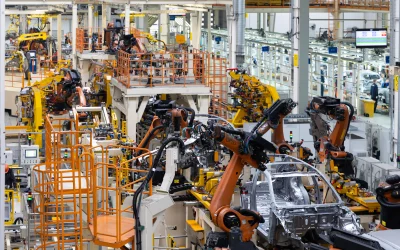
Robotic assembly cell
Assembly robot islands are automated systems used in various industrial sectors to optimise production processes.
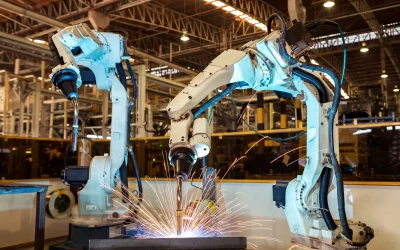
Robotic welding cell
The robot welding cells are used in the automotive industry and in general in companies where metal processing requires high precision.
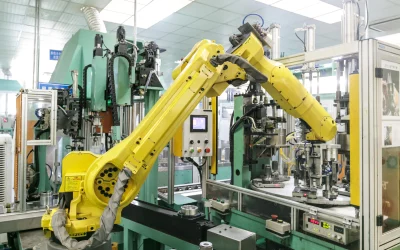
Robotic handling cells
Robotic handling or pick-and-place cells are designed to move, orient, sort, and position materials
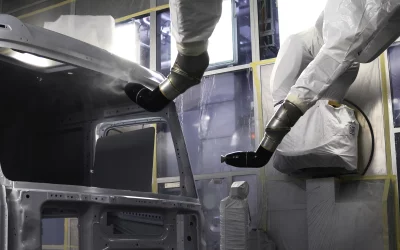
Robotic painting cells
Robotic painting cells are designed to apply paints, protective coatings or other materials on a wide range of products and in a wide variety of application areas.
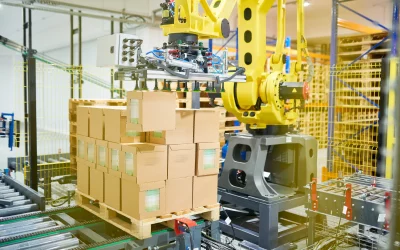
Robotic packaging and palletising cells
Robotic packaging and palletising cells are a key component for any modern production line, especially in high volume environments where speed and precision are critical.
Robotic quality control and inspection cells
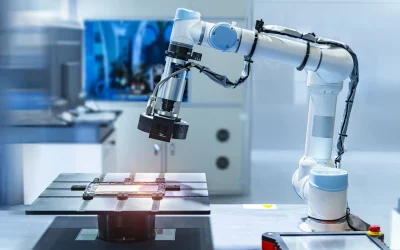
Robotic quality control cells are automation units dedicated to inspecting products during or at the end of the production process.
Those who have already chosen us...








Powered by Internetimage.it
© Copyright 2026 TAURUS Automation Srl -
VAT IT 13158210016 -
REA TO-1343672 -
SOCIAL CAPITAL 10.000 euro iv
