
Robotic Cells in the Forging Industry
At Taurus Automation™ we engineer tailor-made solutions that transform traditional manufacturing into Smart Factories. Forging is one of the most demanding industrial processes, where the synergy between mechanical power and robotic precision is vital.
The three main stages of hot forging:
-
Material heating: an ingot or billet is heated to an ideal forging temperature, which varies based on the type of metal.
-
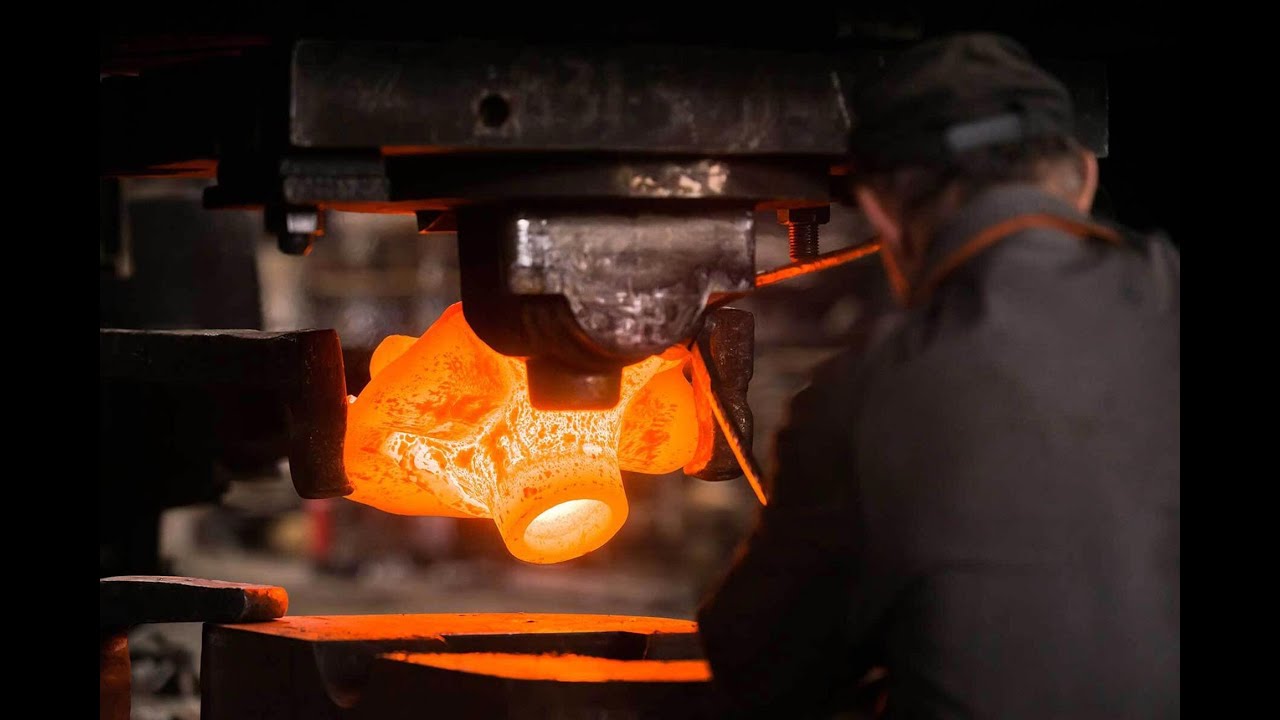
Plastic deformation: the heated material is then mechanically deformed using a hydraulic press, a hammer, or other tools. During this phase, the metal takes on the desired shape, such as a component part.
-
Cooling: once the material has been forged, it is cooled slowly or in water, depending on the required specifications.
Robotic automated cycle for press tending in a forging plant: efficiency and safety
A robotic automated cycle for press tending in the forging sector is an advanced system that uses robots to load and unload material from the press, automating a series of operations and improving process productivity and safety. In this type of system, the robot plays a decisive role in coordinating all stages of forging, reducing human intervention and increasing efficiency.
A crucial aspect of automated robotic forging systems is safety. The robot and press work zones are protected by safety barriers or presence sensors that prevent human access during the forging cycle, avoiding the risk of injury. Furthermore, the robot is designed to stop immediately if dangerous conditions are detected.
A typical robotic automated cycle for press tending in a forging plant can be divided into several steps:
1. Loading the material into the press
-
Material pick-up: the robot, positioned in a loading area, picks up an ingot or billet from the warehouse or the automatic storage system. The material can be loaded manually or come from a conveyor belt that brings it to the robot area.
-
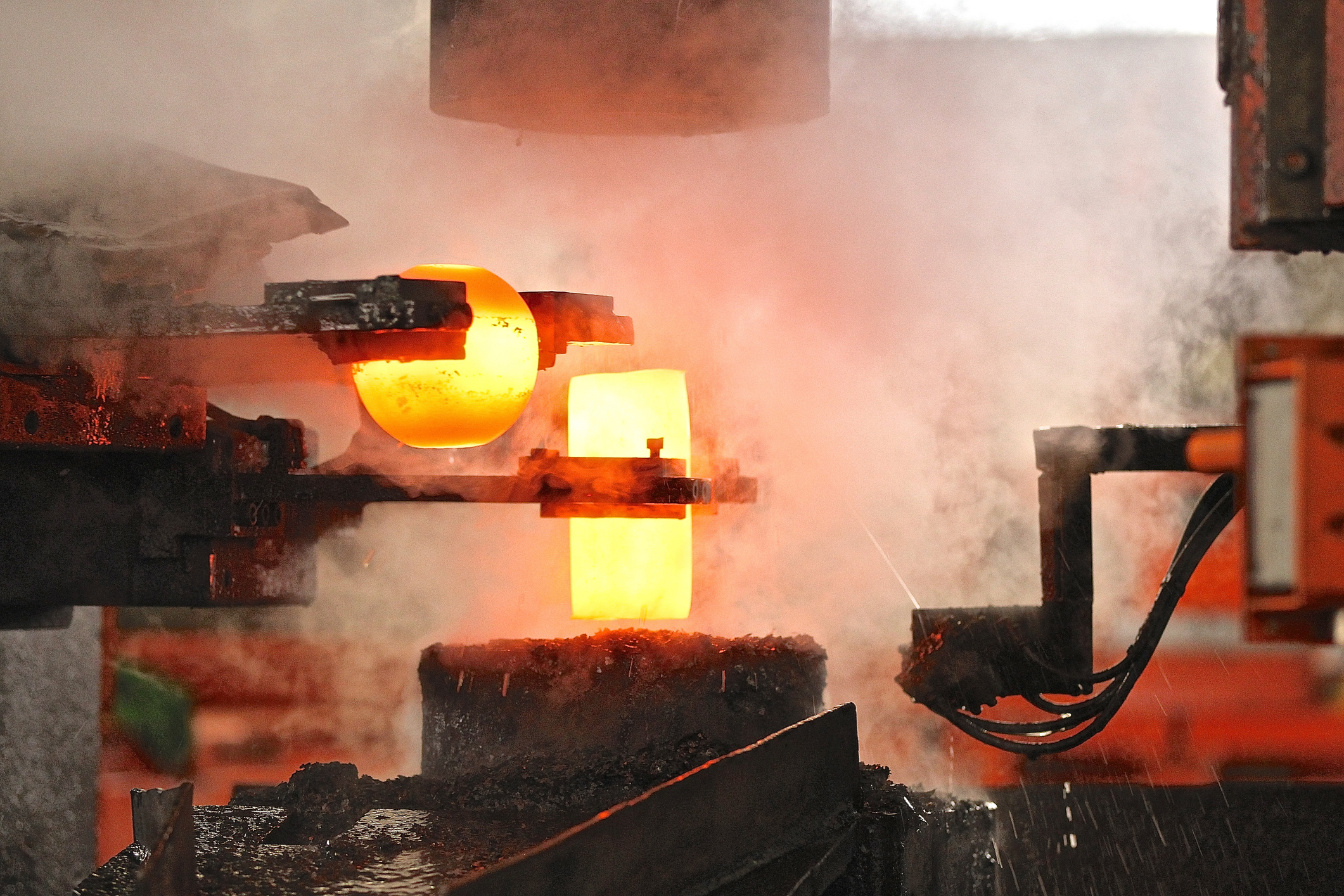
Positioning in the press: the robot transfers the material using a system of grippers, suction cups, or clamps suitable for the type of component. It positions the piece in the press, inside the forging die, with millimeter precision.
-
Position control: sensors and automatic vision systems (such as cameras or lasers) can be used to ensure that the material is positioned correctly before the forging process begins. In the event of a positioning error, the system can alert the operator or interrupt the cycle.
2. Forging
-
Material deformation: once the material is correctly positioned, the press executes the hot or cold forging cycle, depending on the type of metal and the process. The machine applies the necessary force to deform the material, changing its shape.
-
Part extraction: once forging is complete, the robot moves to pick up the finished part from the press. Depending on the configuration, the robot can extract the part with the help of grippers or specific gripping devices for the type of shape.
-
Positioning in the cooling system or warehouse: after pick-up, the robot moves the part to a cooling area, if necessary, or deposits it in a storage system for the subsequent processing phase (e.g., deburring or inspection).
Advantages of a robotic cycle for press tending:
-
Increased productivity: automation allows for reduced cycle times and eliminates slowdowns caused by manual operations.
-
Precision: robots guarantee precise positioning of the material and forged parts, minimizing alignment errors.
-
Safety: reduces the risk of workplace accidents, as robots perform all the most dangerous operations, such as loading and unloading material from the press.
-
Quality control: thanks to advanced sensors, it is possible to monitor the quality of the forged part in real time, reducing the possibility of defects.
-
Flexibility: robotic systems can be adapted to different types of material and different part formats, improving the versatility of the forging plant.
Hot forging: the three phases of the process
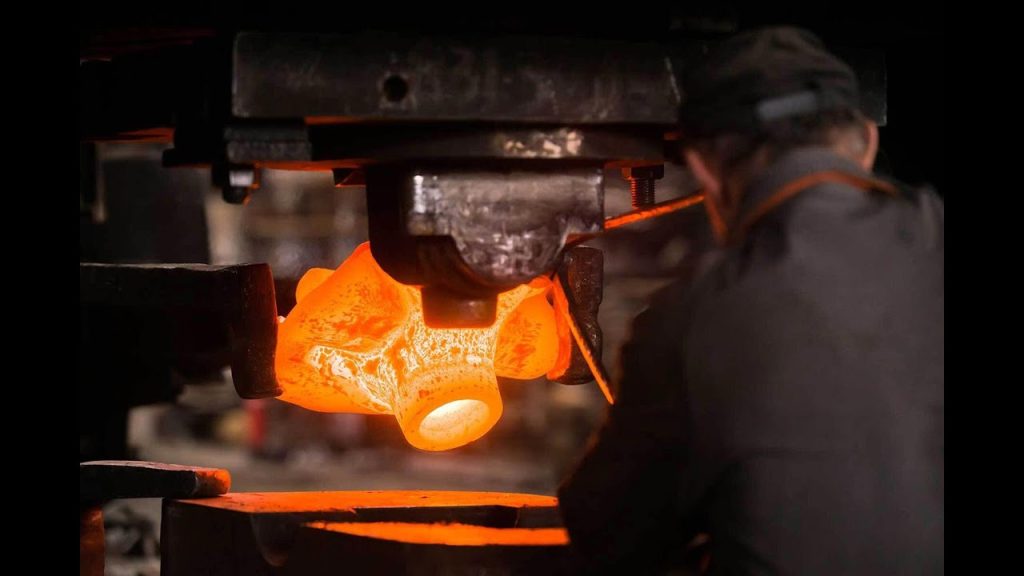
In hot forging, as mentioned, the process can be divided into three main phases, each corresponding to a press cycle. These cycles—namely the forming press cycle, the stamping cycle, and the deburring cycle—serve to obtain the final shape of the part and ensure its quality.
Here is a detailed description of each of the three phases:
1. Forming press cycle
This is the initial phase of forging, in which the material, usually a heated billet, is subjected to high pressure to be deformed into a rough shape. The goal of this phase is to obtain an approximate shape of the desired component, reducing the cross-section of the material and stretching it into a geometry closer to the final shape, but not yet finished.
-
Plastic deformation phase: In this cycle, the billet is placed between the press plates and subjected to great force to “push” the material to fill the mold cavity.
-
Initial formation: The material is roughly deformed, reducing its volume, but not definitively. At this point, the part is still in a raw shape and requires further steps to perfect its geometry.
2. Stamping cycle
The stamping cycle is the phase in which the material deformed in the previous phase is processed more precisely. During this phase, the piece takes on a more defined shape and approaches the final dimension, but is not yet completely finished. The main objective of this phase is to obtain the final geometry of the part with greater dimensional precision.
3. Deburring cycle
After the part has taken the desired shape, the final phase is deburring, a process used to remove any burrs or excess material residues that form during processing. Deburring is essential to improve the surface quality of the part and to remove the “flash” or metal growths that may remain attached to the edges or in areas where the material has been compressed.
These three press cycles are fundamental to ensure that the forged parts comply with the required specifications, with good surface quality and precise geometry.
Contact us now for the design of robotic cells for hot forging!
Ask a quotation or contact us
"*" indicates required fields
Those who have already chosen us...













Powered by Internetimage.it
© Copyright 2026 TAURUS Automation Srl -
VAT IT 13158210016 -
REA TO-1343672 -
SOCIAL CAPITAL 10.000 euro iv
